
You can listen to this post read aloud by the author as a podcast or you can read it for yourself below.
A large, wizened crabapple tree resides in my front yard, shading my porch and stretching its branches towards the second-story window of my office. The tree, and the rest of the home, is new to us this year. We are discovering the idiosyncrasies of each season, which plants need pruned every month, which vines flower in the spring, which leaves turn vibrant colors in the fall, and which spots of the yard need diligent attention to keep the weeds at bay. By July, the one-inch fruits of the crabapple tree have laden the branches till they bend towards the ground, almost mimicking the whimsy of a weeping willow.
One hot afternoon, my mother-in-law helps us prune the lowest branches. As we work, she makes a passing comment that her grandmother used to pickle crabapples. And maybe turn some of them into a crabapple butter. My nose wrinkles at the thought of crabapple pickles. “Crap-apples” my husband likes to call them because they are so bitter and tough. But I wonder at the idea of crabapple butter. It’s been years since I’ve had access to free misshapen apples to make genuine apple butter. Could I? I wonder.
Ironically, once we’ve pruned the tree, the fruit is beyond my reach. I keep staring at the branches from time to time, wondering how I could pick the ripe ones. We don’t own a proper ladder. That was something we kept borrowing from under our neighbor’s porch at our old home, and I’m still mostly strangers with the people that live on our block now. Besides, at seven months pregnant I probably shouldn’t be climbing ladders for crabapples, although I’m still tempted to try.
I’m beginning to think I’ll have to let the whole idea go when a raucous storm blows through. I wake up one Saturday to a yard filled with crabapples that have blown off the tree and a few downed branches that are laden with fruit. I squat and crawl on my hands and knees, foraging through the grass for the fresh ones, my daughters following me with buckets and learning to pick them off the fallen branches. We fill five bowls from the kitchen.
Canning them proves to be tedious. They are small, averaging an inch in diameter. After they are rinsed, I sit for hours, paring the flowering end off. More than once I think I’ve gotten in over my head and didn’t realize how much work this was going to be. Will they even taste good? I have no guarantee. But they are already picked and waiting on my kitchen counter. I continue, a bit stubborn and without the heart to let them go to waste. I listen to The Comfort Crisis on audiobook as I work, the facts and statistics of how far removed we are from the hunting and cultivating of our own food for survival seems ironically telling.
My girls go to grandma’s one afternoon and my husband works late. The house is deliciously quiet and I spend the entire afternoon processing crabapples. One hundred and one times over the course of the afternoon I wonder if I should be doing this. There are so many other things I could be doing. Packing suitcases for my sister’s wedding this weekend. Replacing stretched-worn elastic in cloth diapers. Going to the grocery store. Adding pages to my memoir. Finishing a novel that is almost due at the library. But somehow this is what I want to be doing. Paring crabapples until my thumb feels a bit raw. Dropping each one in the bowl, gradually whittling down the pile of un-sifted ones into a pot of ones ready to cook. There are so many I cook them in batches, adding enough water so they boil down to softness.
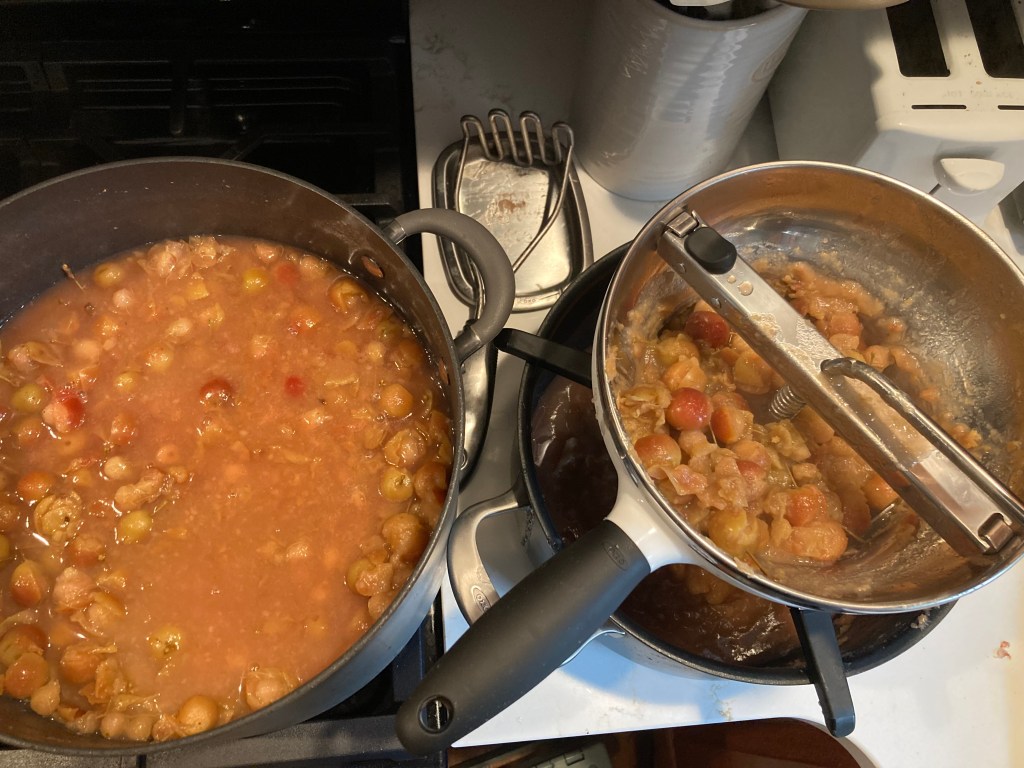
Their skins crack in the hot water, splitting open to reveal the softer fruit inside. One, two, three ladles at a time, I transfer them from the boiling water pot to the food mill. My arm cranks the handle round and round, turning right to press them down, left to scrape the grate clean. Right, right, right. Left, left. Press, press, press. Reset.
Preparing these crabapples for edibility is not the most efficient or classically productive use of my time, yet there is also something about it that feels satisfying. Embodied. It forces me to slow down, inviting me to be fully present with the task.
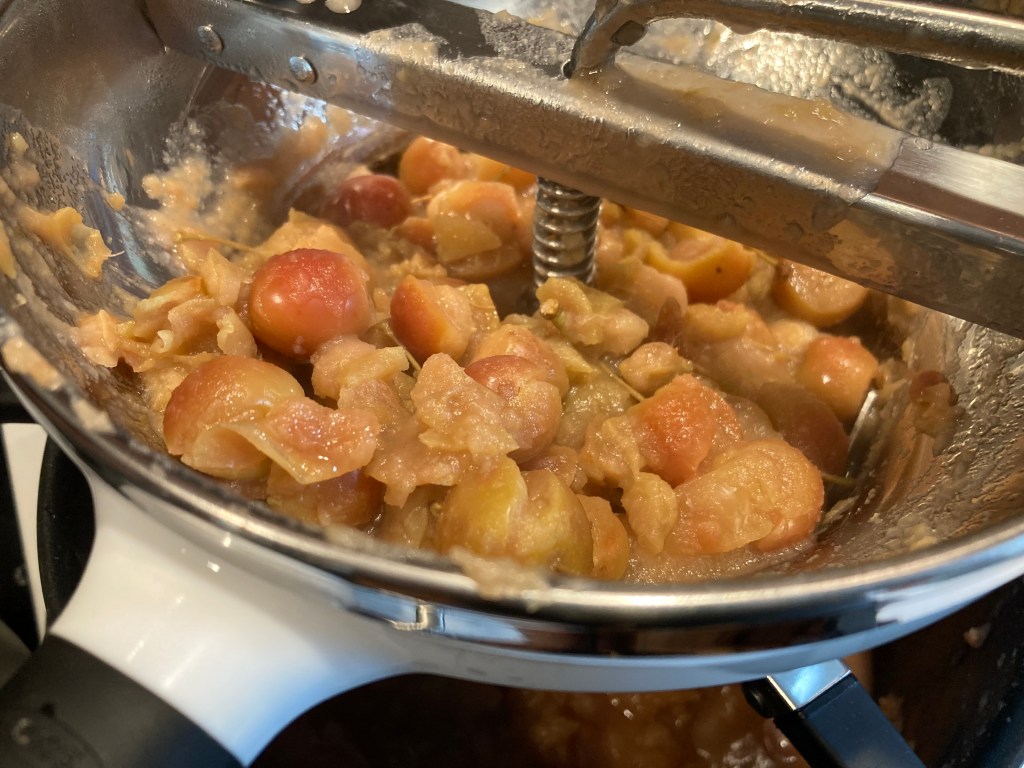
I’m a veteran canner, but I’ve never used a food mill before. The first couple batches I painstakingly use a spatula and spoon to keep pressing what is left in the mill into position to get further pressed. Surely all this isn’t leftover as waste? I’m convinced there has to be more edible flesh to press through to the other side. Yet slowly I realize it is all waste. Or at least mostly waste and whatever remaining fruit on this side of the grate is not worth my time and energy. I surrender to good enough and spoon out the pulp—gathered seeds, skins, and stems—to a bowl to be thrown away later. The process repeats so often my body falls into a rhythm. The pile of creamy peach-colored applesauce grows beneath the food mill.
It looks delicious, but it still tastes tartly bitter. I fear—again—that I’ve been wasting half a day on a futile task, but I keep going. Cinnamon and ground cloves go into the pot. So does an entire bag of sugar, although far less than the ratio the internet recipe suggests. I stir and smell and taste. Add a little more. Stir and smell and taste. The aroma deepens, as does the flavor. I dare to think this might turn out.
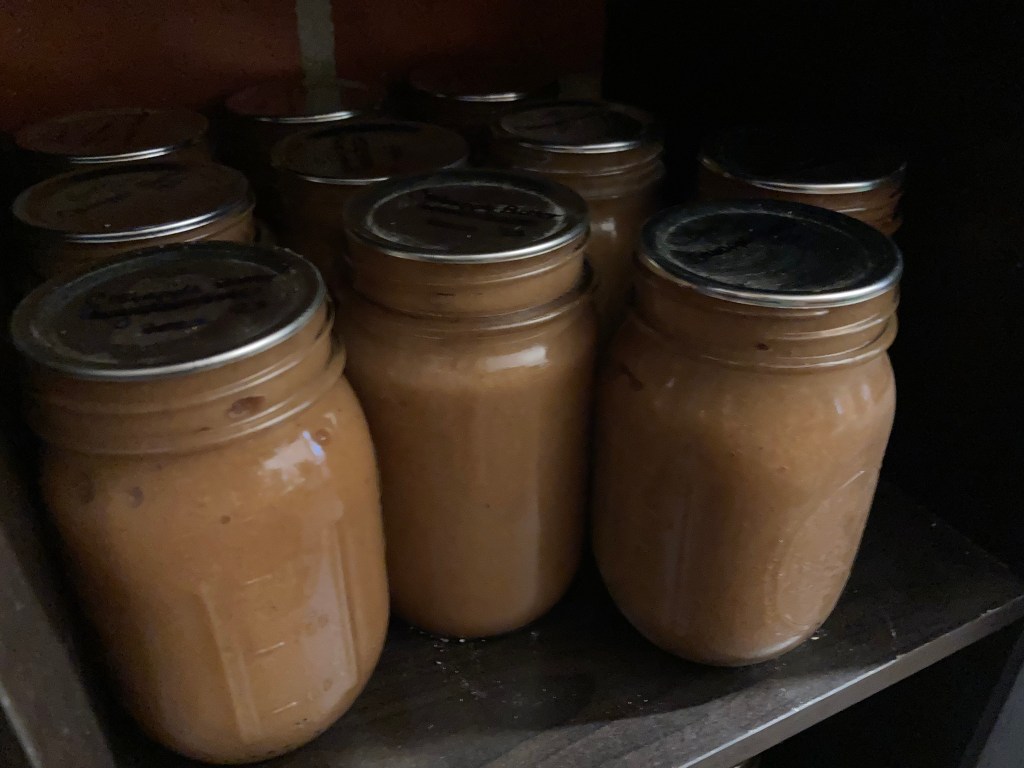
Then comes the familiar part I’ve done countless times before. Scalding hot jars come out of the water bath. Ladled butter so thick I have to shake it off the spoon. Leave a bit of headspace. Wipe the rim. Fasten the lid, but not so tight it buckles. Refill the water bath with full jars. Wait for water to boil. The soft thwock of lids sealing as the jars cool on the counter. When I am done, I have eighteen pints of crabapple butter. Deep satisfaction.
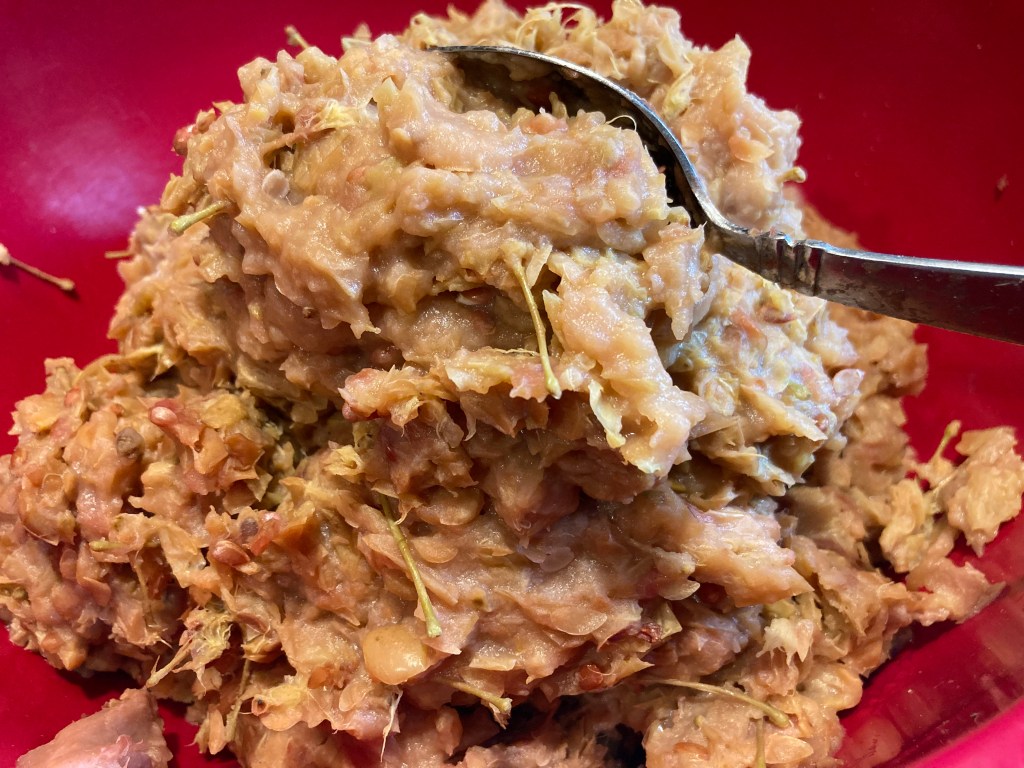
As I wash the dishes and clean up, the bowl of pulp on the counter is the last thing to go. The waste seems to make up at least a third of the crabapples. It is dense and heavy and bitter.
In comparison, the sauce takes on light and air, lifting into a decadent cream. Yet I feel reticent to dump the waste in the trash. If I had more time and knowhow maybe I would compost it, but my embodiment has limitations today. It is time to let it go. Even crabapples seem to mirror a reality I am learning to be true in so many other dimensions of my life. There is a letting go required for any kind of fruit. I need to trust the process. I close the trash bag over the pulp and take it out to the bin.
You are most welcome in this space. If you would like to have my writing delivered directly to your inbox you can subscribe below or find me on Substack @danielleklafter. If you have thoughts, feedback, or questions, you can contact me via the contact form on my website. I welcome dialogue.
Shalom.

 Danielle Klafter