Our family was sitting around the dinner table and my five-year-old daughter said, “What’s voting?”
Commence civic education lesson one.
“We read about it a bit in that Amelia Bedelia book,” I reminded her. Then my husband and I attempted to explain that everybody gets to vote for the person they want to be in charge over something, and the person with the most votes wins the election.

“This year is a presidential election,” I said. “Do you know what a president is?”
She shook her head.
So we explained some more about who a president is and that there were two candidates running to be the next president. “Mommy and Daddy don’t really like [candidate X],” we said.
My darling three-year-old cheerfully chirped up from the seat beside me. “I like [candidate X].” My bleeding-heart little empath who gets concerned worry lines on her face when she sees an image in a meme that is crying. I just want to wrap you up as tight as can be in a giant hug.
After all the questions and explanations were finished, my five-year-old looked as us with a wealth of confidence and said, “If I could vote, I know who I would vote for.
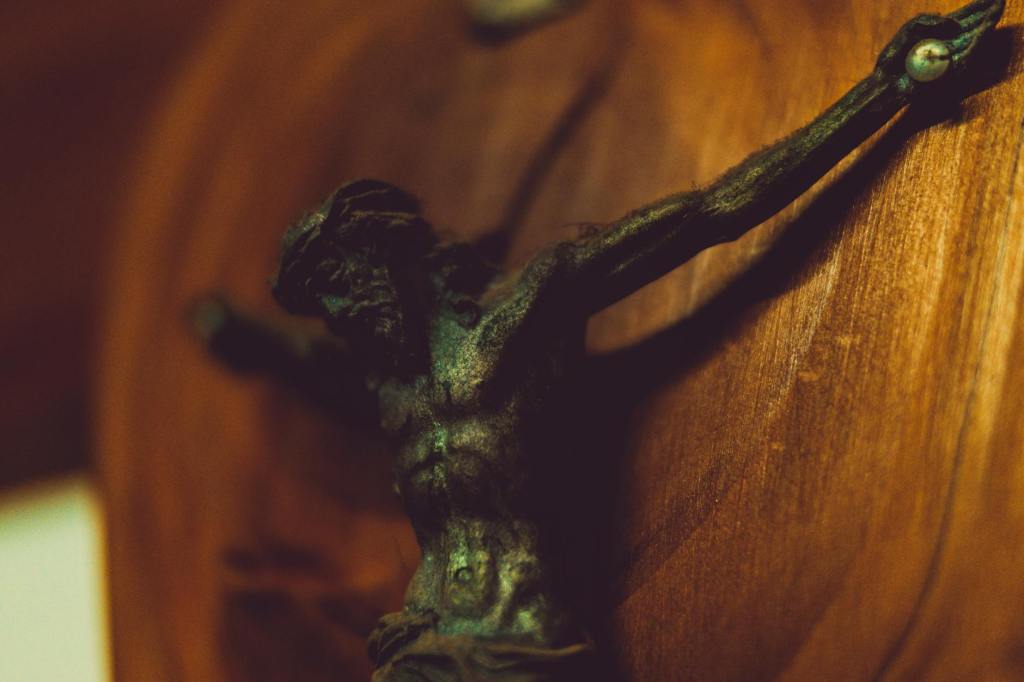
“Jesus.”
She grinned, and then we did too. I think my five-year-old knows something a bit better than the rest of us do.
I wish it was that simple, that we could put the deepest, most grounded, present, faith-filled mystic of all into the seat of authority over the mess we have on our hands. Someone who loved to sit with outcasts, who was both boundaried and protective of the downtrodden. Who knew how to soak up time alone and also could mesmerize a whole crowd. Who genuinely didn’t distinguish between gender, class, or race, but saw people for their hearts and whether or not they had eyes to see in a transformative way. Someone who pushed back on rules for rules sake, and never sought the position of powering over.
But that’s just it. Yeshua would never become president, just as Yeshua never became king, at least in the way that his people wanted him to be. They wanted a man and God who was top-down authoritarian, who would come in and kick the Romans out, probably with some forceful violence and a few choice words. Take that. Showed you. But Yeshua clearly refused any such thing. He never took the path of power over. He took the path of willingly given, co-suffering love.
I’m convinced the only way Yeshua would become a president or earthly ruler is because every person in the country or globe wanted him there, that each of us had reached a high enough level of consciousness that we wanted and trusted his leadership in co-suffering love; that we were living likewise. But if that were true, then we wouldn’t need to elect Yeshua after all. We would already have heaven on earth. Yeshua would already be reigning in the Imaginal realms made manifest on the earth through our own embodiment of that dying-to-self love.
When Pilot questions Yeshua in the Gospel of John, Yeshua replies, “My kingdom is not of this world. If my kingdom were of this world, then my servants would be fighting so that I wouldn’t be handed over to the Judean leaders. But as it is, my kingdom is not from here.”
So Pilate said to him, “Are you a king, then?”
Yeshua answered, “You say that I am a king. For this reason I was born, and for this reason I came into the world, so that I might testify to the truth. Everyone who is of the truth hears my voice.”
Sometimes I think current Christianity is a bit like the Jewish people when Yeshua lived. We want a leader who will come in and wreck everything we hate and set up a new version of the world as we think it should be. Perhaps that’s why we’re drawn towards theories about the end times that involve Yeshua coming back with a sword to conquer the earth (I don’t adhere to that kind of interpretation of Revelation any more, but that’s a whole other conversation for another day.) But none of that is consistent with the revelation of God that Yeshua gives us when he lives and dies upon this earth. He never claims to be a king. Notice how he skirts any acknowledgement of that in his conversation with Pilot. That is a human interpretation of who is he is and what he is meant to do.
The Kingdom of Heaven is not a place. It’s a lens, a way to perceive all things. It’s a pathway to wisdom and a journey to higher consciousness. It’s a journey that entails kenosis (self-emptying or letting go) and substituted love. It’s walking the path that Yeshua modeled and showed us was possible. It’s never a path that covets power over; it certainly never jockeys for political gain. It’s a pathway of surrender and opening. Counterintuitive, to say the least, in our current political and global climate, one of fear and self-protection, accusation and hustle.
For those with ears to hear, Yeshua quietly offers us another way. It’s not a fix to the system we already have. It’s an entirely other plane of being.
My five-year-old wants to vote for that. I sure do too.
Related Reading:
- My recent post: Moving Beyond Political Bifurcation Towards the “Law of Three”
- The Wisdom Jesus by Cynthia Bourgeault
- The Wood Between the Worlds: A Poetic Theology of the Cross by Brain Zahnd
If you’d like to receive my writing delivered direct to your inbox, subscribe below. To contact me with any thoughts, questions, or response, feel free to use the contact form on my website.
Also, a new Parenting resource page is available on my website, a collection of books and ways to approach spirituality for kids in a contemplative, nuanced fashion.
Shalom.

 Danielle Klafter