
This week has been a slog. Parenting has felt like walking through a hopeless quagmire. It’s been harder to connect with my husband. My energy has been down, perhaps because I’m emotionally exhausted and discouraged. Writing hasn’t happened, which means I feel less purposeful and less like myself. Choosing to write this blog post is my attempt to at least do something, and also to be vulnerable about the fact that my life often feels like a messy struggle. Maybe you can relate.
In light of a frustrating week…let’s talk about goal setting.
Did you have a gut reaction to that phrase “goal setting”? Did you internally groan? Immediately feel shame? Something along the lines of, ha! That’d be nice, but where in the world would I fit that into my already overloaded life?! Or maybe you’ve tried that before, and it just hasn’t worked. What’s the use? you might think. Perhaps take a moment and journal what your reaction was. What are your impressions of why you think that is?
Go ahead. Take a moment. Jot a few things down. Or make yourself a voice memo of your thoughts.
Now let’s share.
I struggle with the notion of setting goals. It always sounds good. But then if I set them, I usually wind up feeling incredibly frustrated because life gets in the way of making them happen. For instance, a year and a half ago I wanted to spend my fall getting my manuscript out to a bunch of agents. I made a few submissions and then my father-in-law suddenly passed away. Life went into survival mode and all my writing goals when out the window for quite some time. On a smaller scale, I may have a goal of writing a few pages on a morning my kids are at school. I may have even worked hard to complete my grading on time so that I could carve out that space—and then someone gets sick. All of a sudden that hard-won time for myself and my work is gone. Or maybe like this week, life just feels hard, and I’m tired, and it feels easier not to try so hard. Resistance wins, and I want to give up.
One reason goal setting is personally hard is because goals often feel like expectations. On the one hand, expectations are good. If I want to become a published author one day, I have to set some smaller goals and actually put in the hard work to give myself a chance to make that large goal a reality. If I don’t set goals and follow through on them, nothing is going to happen.
But on the other hand, missing goals often feels like a failure. When my kids get sick or there’s a snow day or a funeral or a fill-in-the-blank, it’s hard for my underlying reaction not to be anger or frustration. Sometimes it feels easier not to set the goals or expectations in the first place so that I don’t have to deal with the pain or disappointment of not meeting them, especially when it’s outside of my control.
I had a conversation with a grad school friend recently about goals. We’re both moms. We’re both writers. We both work. It’s a lot to juggle. We are both wondering, what is the balance for setting goals in a reasonable way that both encourages us to keep working toward what we want and also doesn’t shame us or make us feel like a failure when life happens? It’s a work in progress for both of us, but here are some thoughts we’ve entertained along the way.
1) Label the goal a “stretchy” goal.
I’m mostly stealing this from my friend, Caitie. She set a stretchy goal of running a half-marathon next fall. (You can read her first post about this on her blog. Poke around her site to find more entries as her goal develops and progresses.) By the word stretchy, she’s acknowledging that the goal might have to expand or contract. She also might have to hold it loosely. Maybe she’ll be able to run the whole race. Maybe she’ll have to walk a portion. Maybe she gets to the end of summer and realizes that she can’t do this at all because of an injury or some other factor. It might be a goal she has to let go. But she’ll have done a lot of healthy work and personal growth that are beneficial along the way. And she just might fully meet that goal and be surprised! She won’t know unless she tries.
I wasn’t ready to run a marathon. But her idea intrigued me for my writing. What kind of stretchy goal could I set for myself? Should I set a goal of how many times I wanted to write in a week? Or how many pages I want to complete by the end of 2024? Or is it better to have a long-term task-driven goal of finishing a new manuscript in its completion? If so, what would be a reasonable time frame for me to expect to do so, especially if I don’t know how many pages said manuscript will end up being?
2) Stretchy also means planning for life to interrupt.
If I have a large long-term goal, say writing 250 pages on a manuscript over the course of a year, then I can break that goal down into more bite-size pieces. If I want to write that much in a year, then that means—on average—five pages per week. Staying stretchy means setting long-term goals that might offer margin to catch up when life gets in the way. Because life will get in the way. For instance, if I set a goal of writing five pages per week on a manuscript, with the idea of those five pages being split up into roughly two strong writing sessions. That sounds manageable. Maybe. But some weeks, no writing happens in my life, for a host of unpredictable reasons. If I had set a goal of writing fifteen pages per week (three pages per weekday) and encounter a week where no writing happens, then I will feel drastically behind and to “catch up” to my long-term goal would require a daunting thirty pages in one week. Very unrealistic. But if I miss a week where the goal was five pages, making that up the next week by writing ten, might be possible, if life goes better. Or maybe I catch up over several weeks, just increasing my page count a couple pages per week. Then I can still stay on track for the long-term goal of writing 250 pages for the year.
3) Something is better than nothing.
Stretchy also means my goals might have to adapt. It’s better to set goals that are attainable than to set goals out of reach that will make me give up sooner rather than later. Caitie and I have talked about trying on a goal on for size and seeing how reasonable it is in that stage of life. If it doesn’t seem to work, then give yourself permission to make an adaptation. If I can’t get five pages of writing done in a week, can I get two? Can I get one? What if I set a goal of writing for only five minutes a day? Or just one sentence? As ridiculous as it feels, one sentence would be better than nothing. And, often one sentence will turn into more. On the days it doesn’t, I’ve still met my goal.
Expectation vs. Hope
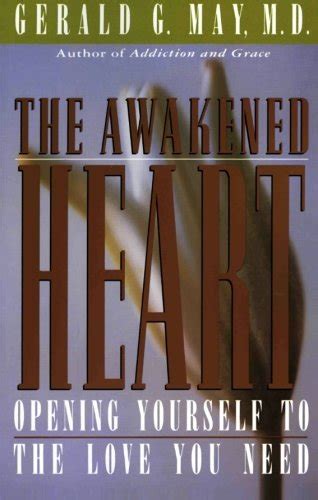
Thinking about goals in this way reminds me of a passage in Gerald G. May’s book, The Awakened Heart, a passage I’ve returned to again and again with my spiritual director. May writes about the difference between expectation and a hope. Expectations often work as demands, while hope is willing to suffer through the messiness of life and disappointments without giving up. Expectations clench things tightly in a fist, while hope holds hands open, willing to surrender.
Here are some snippets from the passage:
“Expectation refuses to permit wonderings or doubt, and so it is closed off, final and frozen. When an expectation is not met, it dies. Sometimes, with grace, hope is born from the rubble of dashed expectations. More often, the death is simply denied, reality is ignored, and another expectation—just as rigid and just as impossible—is forged. Without some kind of hope, each remanufactured expectation is covered with a thicker coat of cynicism and paranoia.
Expectation is brittle and can only be shored up by delusion, but hope is soft and willing to suffer pain.
“Hope is flexible, willing to change or even be given up if need be. But […] true hope is not at all passive. Its very flexibility allows hope to be alive and active in response to all situations. It is expectation that is truly passive, frozen into paralysis or compulsive repetition.
“Expectation, like efficiency, looks at the end of things, for goals and accomplishments. Hope, like love, looks to the beginnings of things, for promptings, longings, urgings.”
I come back to this passage time and time again in application to my spirituality, my relationships, my marriage, my parenting, and now my writing. It’s so hard, because even good things that start as genuine hope, can easily later slide into rigid expectations. It also takes a lot of emotional resilience and energy to keep holding hope, because often it requires also holding grief.
Hope longs for good things. Wanting to produce meaningful writing that sees its way into the world is a good thing. I can hope for that. But locking myself into a rigid expectation for how that will happen—or even if it will happen—will not bring me success, or at least not the kind of success I really want. If I do clench expectations, then every time I encounter a week when I can’t write, I will be angry and bitter and an ugly person in the face of my expectations having to die.
Hope is less about the result and more about the beginnings. Get up and try again. Open. Long. Stay in the pain that sometimes results from that longing. This seems to me why setting goals feels so complicated at times. It’s this tightrope to walk between holding myself accountable to going after what I actually want to happen, and holding the results of those attempts loosely in my open hands. It requires surrendering my hopes to something beyond, sometimes having to let them go, and finding the resolve to pick them up again, and again, and again, until they bear fruit in my life.

 Danielle Klafter