
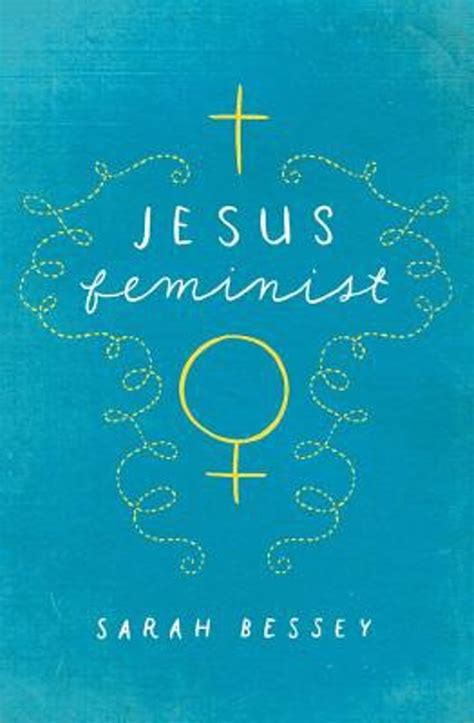
I recently read Sarah Bessey’s book, Jesus Feminist: An Invitation to Revisit the Bible’s View of Women. This book was published in 2013, so I’m about a decade behind in getting around to this one. I put it off for a long time because I was intimidated by that word “feminist.” Feminist can mean a lot of different things in a lot of different contexts, but in the conservative world where I was raised it’s a controversial term, a term that is seen as going against the Biblical way. Bessey herself acknowledges, “In some circles, using the word feminist is the equivalent of an f-bomb dropped in church” (12). Reading her book required me to push back against that stigma.
Bessey’s book surprised me. It was one of the most graciously written books I’ve ever read. No joke. There was no man bashing. No anger. Just some beautifully shared experiences, honesty, posed questions, and an invitation into something more. I wish I had read it sooner.
Bessey writes, “I know feminism carries a lot of baggage, particularly within the evangelical church. There are the stereotypes: shrill killjoys, man-haters, and rabid abortion-pushers, extreme lesbians, terrifying
some of us on cable news programs, deriding motherhood and homemaking. Feminism has been blamed for the breakdown of the nuclear family, day care, physical and sexual abuse, hurricanes, the downfall of ‘real manhood,’ the decline of the Christian Church in the Western society, and spectacularly bad television. Most of what has passed for a description of feminism is fearmongering misinformation” (11-12).
She articulates her goal in writing her book as follows: “I won’t desecrate beauty with cynicism anymore. I won’t confuse critical thinking with a critical spirit, and I will practice, painfully, over and over, patience and peace until my gentle answers turn away even my own wrath. I will breathe fresh air while I learn, all over again, grace freely given and wisdom honored; and when my fingers fumble, when I sound flat or sharp, I will simply try again” (6). These are not the words of an angry, home-destroying, activist.
I grew up as the oldest of nine children in a home where my mother chose to not work outside of the home. She was in many ways the stereotypical homemaker. She homeschooled all nine of us children in one form or another. If you walked into our home the first thing you encountered was her mudroom with neatly organized rows of cubbies for shoes, labeled individual baskets for hats and gloves, and a wall of hooks for coats. A place for everything and, more often than not, everything in its place. She was and still is a rockstar organizer. She was so successful in her role that I’m sure there were plenty of mothers of much fewer numbers of children who struggled with not being able to keep their homes in as good order as hers. I’m one of those mothers now. I only have two children, and while I have my mother’s organizational skills, I don’t enjoy the daily grind of cleaning and maintenance like she does. I have to work to set aside the thoughts of shame that can still creep in when I don’t keep my home up to the standards my mother prefers to keep in hers. (If you can relate, see my recent post “Stop Shoulding Yourself.”)
From what I can tell, my mother found great joy and fulfillment in being a stay-at-home mom. She made it her life. Now that she’s a grandma, I think she’s having even triple the amount of fun. I never judged my mother’s choices. They were her own. But from a fairly young age, I felt the pull to want something different. As early as high school, I knew I didn’t want to only stay home and be a mother. At the time, I envisioned my something else being a form of full-time ministry. It’s a long story how that vision died, a story for another day. But I started teaching when I got married, and I stayed teaching after children. I needed to have alternate outlets for my brain besides diapers and endlessly listening to the Frozen soundtrack on replay. I’m also an HSP (highly sensitive person) and quiet space to de-stimulate from the constant noise of wild, tiny humans is a must-have for my sanity. As a result, I made the choice to continue working and pay for part-time daycare rather than quit both and stay home full-time. But I had to fight feelings of unworthiness or that I was failing as a mom when I first made the choice to pursue daycare, despite the fact that long-term it has been better for both myself and my highly-energetic social firstborn.
By no means do I intend my choices to be a commentary or evaluation of anyone else’s choices. This is just what I needed for how I’m wired. Other women need different things and I want them to be free to make those choices for themselves, whatever they deem them to be. I think that’s the point of true feminism. However, I would like them to truly make those choices out of freedom, not out of feeling that one or another option is more spiritual or moral.
Making healthy choices for my personhood has not come without its battles with shame or feeling like I’m going against the ideal version of Biblical womanhood I was raised in as a child. I have chosen to work outside the home. While that is not uncommon at all among my peers and friends, it wasn’t modeled for me in the majority of the women I grew up with. I nannied and babysat for these women. Many of them had four, five, eight kids. They led women’s Bible studies and homeschooled their children and volunteered for VBS. I was lauded for my skills in homemaking: cleaning, organization, child-care, sewing. The words, “You are going to make such a wonderful wife and mother” echoed through my life like a refrain.
My dad’s a physician, and I remember him cautioning young women away from becoming doctors because it was so much schooling and money that they wouldn’t want to give it up to stay home with their children. The subtle implication was that it was best for women to stay home with their children and choosing something else was sub-par. I never wanted to be a doctor, but what if I had?
I haven’t had clear words over the years about gender roles and the church. Just a niggling sense that I wanted more than had been offered to me, and a quiet discontent at how women are left out of leadership roles in the church. I spoke with a friend yesterday who acknowledged she hasn’t studied or found the language to specify why women shouldn’t be excluded, but she knows something is off. Bessey gives voice to this sense of exclusion, to the ways women have felt harmed or pigeon-holed in their roles. In her book, she invites her readers to sit around a bonfire with her and raise a drink and be present to pain and look to something better.
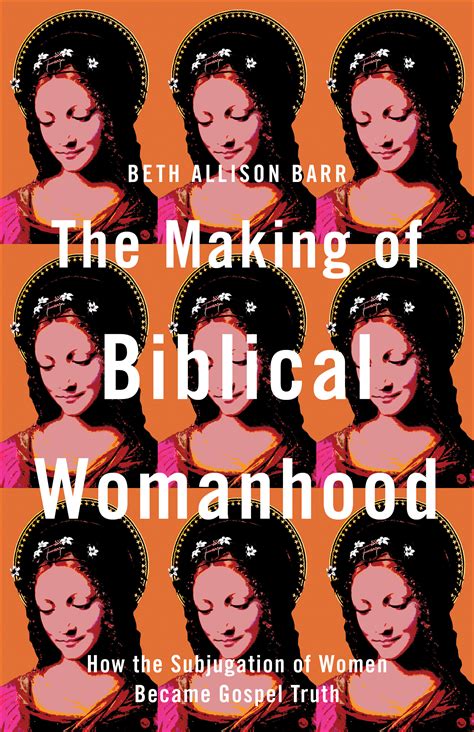
From Bessey’s book I turned to the more recently published The Making of Biblical Womanhood: How the Subjugation of Women Became Gospel Truth by Beth Allison Barr (2021). Barr is a historian by trade who teaches at Baylor University. She shares some of her experience, but her book takes a much deeper dive into the interpretations of scripture regarding the role of women. She takes time to fully contextualize these scriptures in the history of what was happening in the time they were written.
Why is Paul saying this? When is Paul saying this. In context, does it mean what we’ve assumed it means all these centuries later? Often the answer is no.
I have run up against the walls of being excluded from fully contributing in spiritual contexts. When I was twenty-seven, my life had recently fallen apart, I needed a job, and I took a secretary position at the church I had grown up in. I had lost my ministry dream and church was supposed to be meaningful, so I thought I could at least eke out a sense of significance from my crumbling life. I wasn’t content to be called a secretary. I quickly took initiative and started re-structuring an office and church that was in a lot of disarray. I became more of an office manager. I set up new book-keeping, I cleaned out old closets and pitched the remnants of cassette tape racks that were still gathering dust on shelves. I organized a lending library. I brought the office out of the dark ages into the technology of online giving and mass communication tools, social media and videoed announcements. I even led worship sometimes on Sunday mornings. Everyone was thrilled to have my organizational skills. They loved when I played the piano. Both of these fell under the heading of feminine tasks.
Yet the moment I tried to do more and influence the way the service ran or bring up dysfunctional issues in the church, I ran into walls. I was allowed to play the piano, but I wasn’t allowed to change the ambiance of communion. I was allowed to creatively write and design a script for the Christmas Eve service, but only under the supervision of a male elder. I was allowed to try and voice my concerns with dysfunction to male leadership, but I eventually had to both resign my position and quit the church altogether because of the lack of response. I was young, female, and unmarried, and I feel all those factors contributed to where my voice was allowed and not allowed. After I left, a slightly older married man stepped into the office manager role; when he spoke up, changes started to happen. When they hired a new male pastor who noticed some of the same things I had been quietly screaming about, those things were no longer tolerated. Whether or not it was the intention of the male leaders of that church, the message I received was that my voice mattered less because I was a woman. Even though eventually everything I had been saying was confirmed to be true.
I once had a conversation with my dad about how this same church was skewed against women in leadership.
“Women are allowed to lead,” he said.
“Then name me one woman who has held a leadership role that hasn’t been over women’s or children’s ministry,” I said.
He failed to come up with one.
Barr traces the history of the roles of women in the church through the centuries, following shifts in politics, philosophies, culture, and translations. Her overall premise is that the current version of “biblical womanhood” I was raised in is based more on conforming to secular culture and power plays than it is about being countercultural. It’s not really God’s heart for women at all.
Barr’s book is incredible. I’m not going to try to summarize or encapsulate it here. I’d highly encourage you to go and read it. Even if you think you are going to disagree, that’s okay. I’d still encourage you to read and consider. Don’t judge it before you’ve taken a look yourself. After you’ve read it (or while you’re reading it), if you find yourself feeling defensive or judgmental or scared of the implications, I’d invite you to sit with that feeling for a bit. Could you ask yourself some questions?
Why do you feel that way? Where does this feeling come from? You might think it’s the “rightness” of your faith. But consider it might be something else. Is it the way you were raised? Is it your ego, flaring up defensively? Is it shame? Is it a coping mechanism? Is it not wanting to face making a change that won’t be easy?
None of us like to realize we’ve been wrong. Perhaps feeling convicted may be a part of the journey of reading this book. But beyond that, it’s an invitation into something better. If there is a better way to bring all of God’s image to the table, then wouldn’t we want to be a part of that? There’s still time. Life isn’t done. There is hope.
I’m still not sure what to do with Barr’s book in practice. It feels incredibly validating to know that the ways I’ve wanted to push against the norm are not actually “rebellious” or “unbiblical.” The information she presents is very freeing. But it also makes me angry. There have been centuries of needless suppression and injustice in the name of God. It holds similarities to verses about slavery being used to justify atrocities over the centuries. Akin to Bessey, I don’t want to be angry and go around bashing people and institutions. But I would like to see change. So what do I do now that I believe women have just as much right to leadership positions in the church as men, but I continue to attend a congregation that doesn’t allow that? I’m thirty-seven years old and I’ve never heard a woman preach. This is a source of deep grief for me. Some of the wisest people I know are women. And they’ve not been allowed to share that wisdom publicly. What do I do with this knowledge that until both genders are allowed a seat at the table, then half of God’s image is being left out and everyone suffers in the process?
Would you join me in wrestling through what that might mean?

 Danielle Klafter